Now Reading: How to set up your mason jar fridge organizers
-
01
How to set up your mason jar fridge organizers

Your fridge doesn’t have to look like a science experiment gone rogue. Enter mason jar fridge organizers — charming, practical, and mildly smug about how tidy they make your leftovers look. Think glass containers for fridge storage that double as a tiny artisanal grocery store for one. They keep things visible, stackable, and frankly photogenic in a way that plastic tubs can’t match.
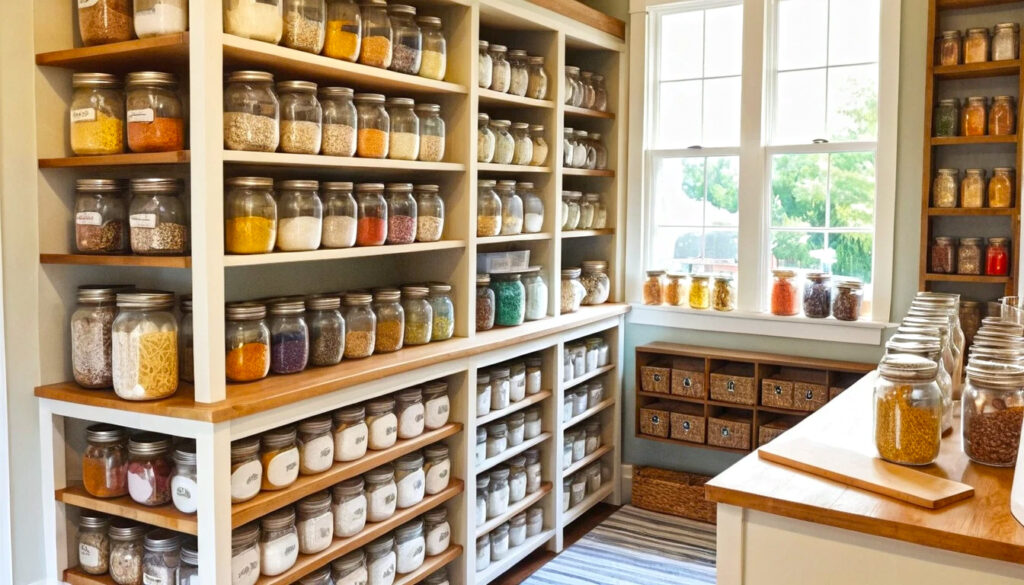
Imagine opening the fridge and seeing rows of gleaming glass storage containers for fridge—each jar labeled, sealed, and radiating calm. That’s the design goal. Mason jar fridge organizers transform chaos into color-coded serenity: yogurt parfaits at eye level, chopped herbs in a neat row, and sauce jars that refuse to face plant on the shelf. They’re the kind of organizers that make you whisper praise at 9 p.m. While grabbing an apple.
Materials & tools needed for mason jar fridge organizers
What you’ll need:
- A variety of mason jars (8 oz, 16 oz, 32 oz) — mix sizes for flexibility.
- Airtight lids or reusable silicone seals (look for lids that say airtight containers for fridge).
- Permanent labels or a chalk marker for easy swapping.
- Small lifting tray or wire shelf risers for tiered organization.
- Fine-mesh strainer, funnel, and measuring cups for prep.
- A marker, and a soft cloth for cleaning.
Tools: jar lifter or tongs, drill with small bit if you want to attach lids to a rack, and a label maker if you enjoy precision.
Step-by-step: set up your mason jar fridge organizers
- Decide zones. Allocate sections in your fridge for dairy, condiments, snacks, and meal-prep. What this really means is: stop shoving everything on that bottom shelf.
- Match jar sizes to contents. Use 8 oz jars for dressings and herbs, 16 oz for soups and leftovers, and 32 oz for bulk items. Glass containers for fridge work best when appropriately sized.
- Clean and dry jars. Sterilize if storing cooked food long term. Moisture is the enemy of crispness.
- Fill jars using a funnel to avoid spills. For salads, layer dressing at the bottom and greens on top so nothing goes soggy.
- Seal with airtight lids. If you’re aiming for airtight containers for fridge, invest in silicone gaskets or vacuum lids.
- Label jars with date and content. Use the oldest-first rule: rotate so nothing becomes the science project you forgot.
- Stack or riser. Place heavier jars on lower shelves and lighter ones above. Use wire shelf risers to create a tiered display for visibility.
Pro tips and small luxuries
- Freeze soups in 16 oz jars for single-serve comfort food. Leave headspace for expansion.
- Put chopped herbs in a little jar of water and cover with a lid—keeps them fresh and visible.
- Use clear jars for leftovers so you can identify contents at glance and avoid the “mystery tupperware” dilemma.
- Keep a “snack row” at kid-eye level to make the healthy choice the easiest one.
Mistakes to avoid and solutions
Mistake: using non-airtight lids and expecting freshness miracles. Solution: upgrade to airtight containers for fridge—your jars will keep sauces bright and herbs perky.
Mistake: overfilling jars, especially before freezing. Solution: leave 1–1.5 inches of headspace to prevent cracked glass.
Mistake: mixing hot foods straight into the fridge in glass. Solution: cool to room temp or use a cold-water bath first. Thermal shock is a jar’s worst nightmare.
Mistake: tiny handwriting on tiny labels. Solution: make labels large and bold; you’ll thank yourself in the 2 a.m. Leftovers scavenging.
Design alternatives and varieties
- Rustic farmhouse: mismatched vintage mason jars with twine tags. Good for weekend brunch vibes.
- Modern minimalist: uniform 16 oz jars with monochrome labels and magnetic lid markers. Perfect for tiny apartments.
- Meal-prep station: set of labeled jars for Monday to Friday lunches, stacked on a sliding tray for quick grab-and-go.
- Condiment carousel: use small jars grouped on a lazy susan for sauces and dressings.
If you prefer glass containers for fridge storage with snap-on sections, consider modular inserts that hold jars in place so nothing tumbles when the door slams.
Glass choices and longevity
Glass containers for fridge aren’t just prettier—they’re inert, don’t retain odors, and are recyclable. Use tempered jars where possible for freezing. Replace lids if the seal degrades; the jar is fine but a leaky lid ruins the party.
My real-life experience
I tried mason jar fridge organizers during a week when my life felt like a to-do list with a heartbeat. Initially it was vanity: i wanted my shelves to look like a boutique deli. Then it became survival. Breakfast parfaits were predictably ready, my toddler picked the greenest grapes because they were visible at eye level, and my midweek panic over “what’s for dinner” softened into “what’s already jarred.” The first week i saved two grocery trips and one sad attempt at salad from the bottom of the crisper. Also, i learned to mourn expired yogurt openly and label with theatrical dates.
Final thoughts
If you want a fridge that works for you rather than against you, mason jar fridge organizers are the kind of practical pleasure that pays back daily. They’re Eco-friendly, they elevate leftovers, and they make the phrase airtight containers for fridge feel like a small domestic superpower. Swap a drawer of mystery for rows of glass storage containers for fridge and you’ll be surprised how satisfying a labeled life can be. Start with a few jars, get creative, and enjoy the small victories—your fridge will thank you, silently and coolly.
Design, stack, seal, label, and repeat. Welcome to tidy bliss. Mason jar fridge organizers are waiting.